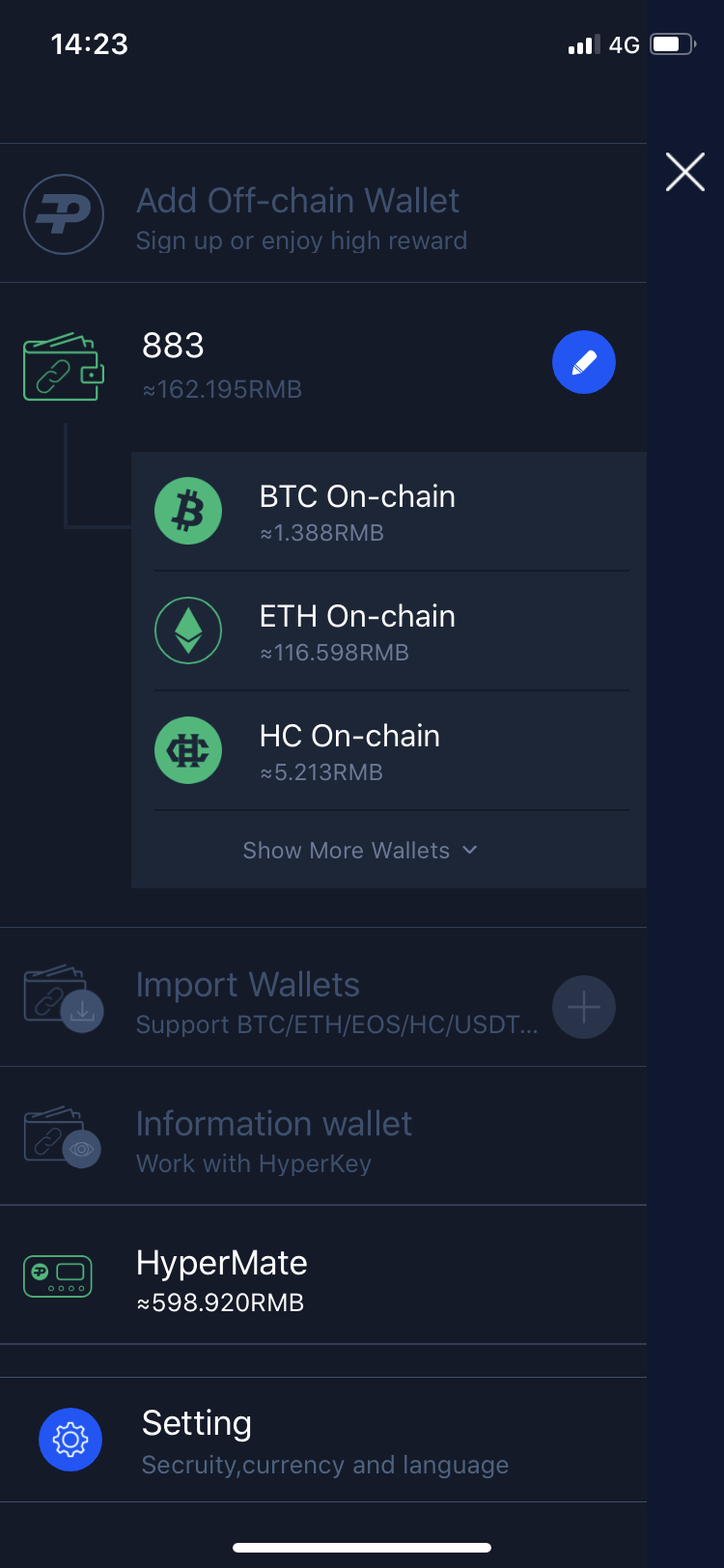
1. Open HyperPay app, click ETH on-chain wallet
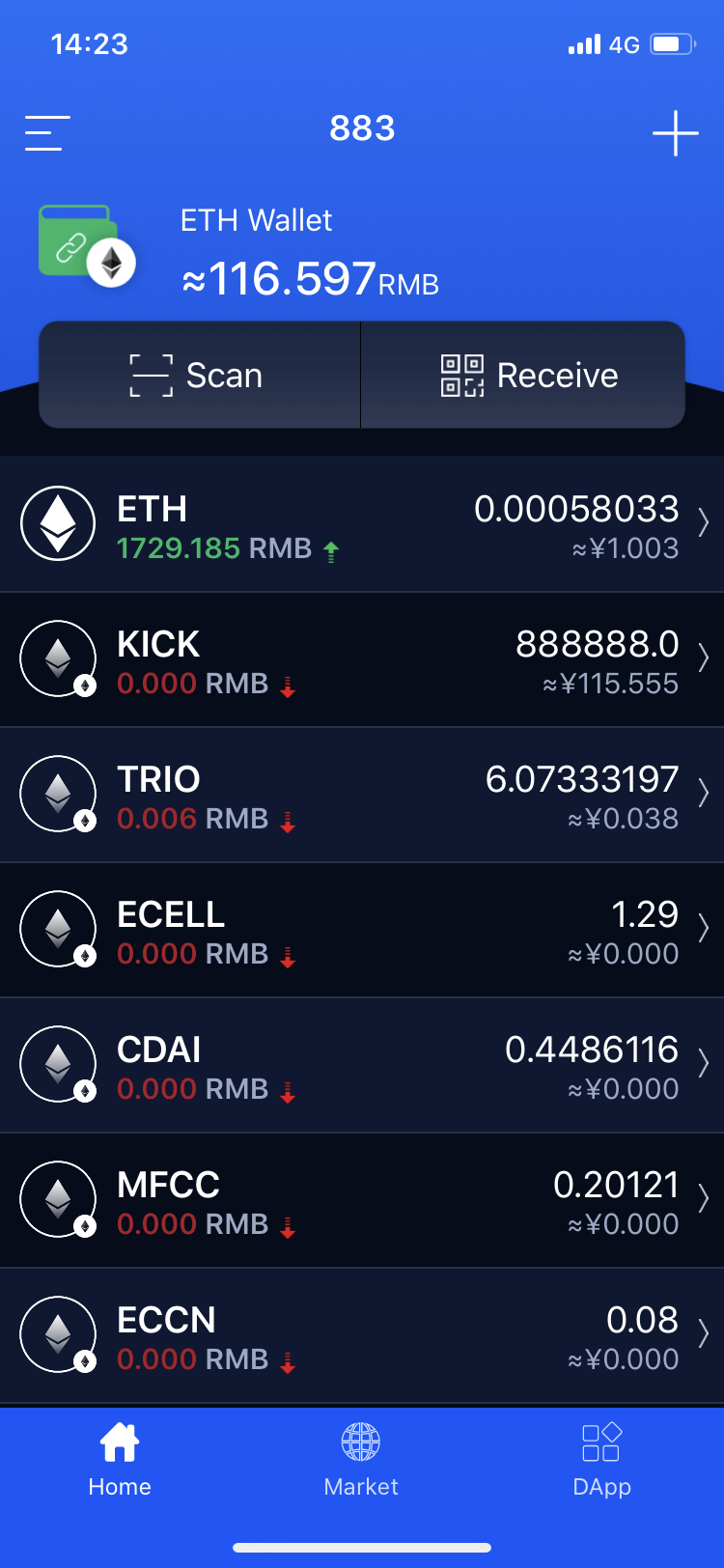
2. Click DApp
3. Click the scrolled banner to enter into ETH2.0 page

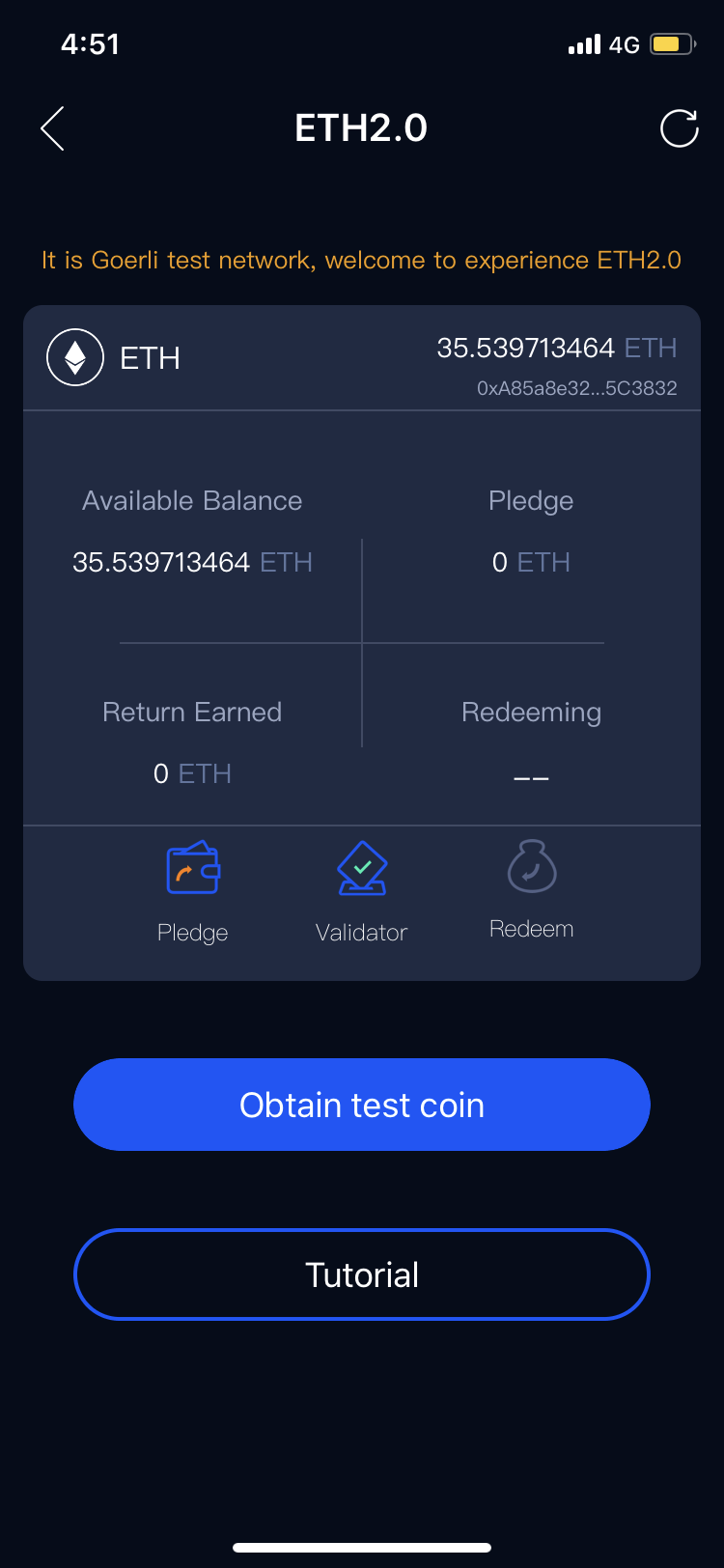
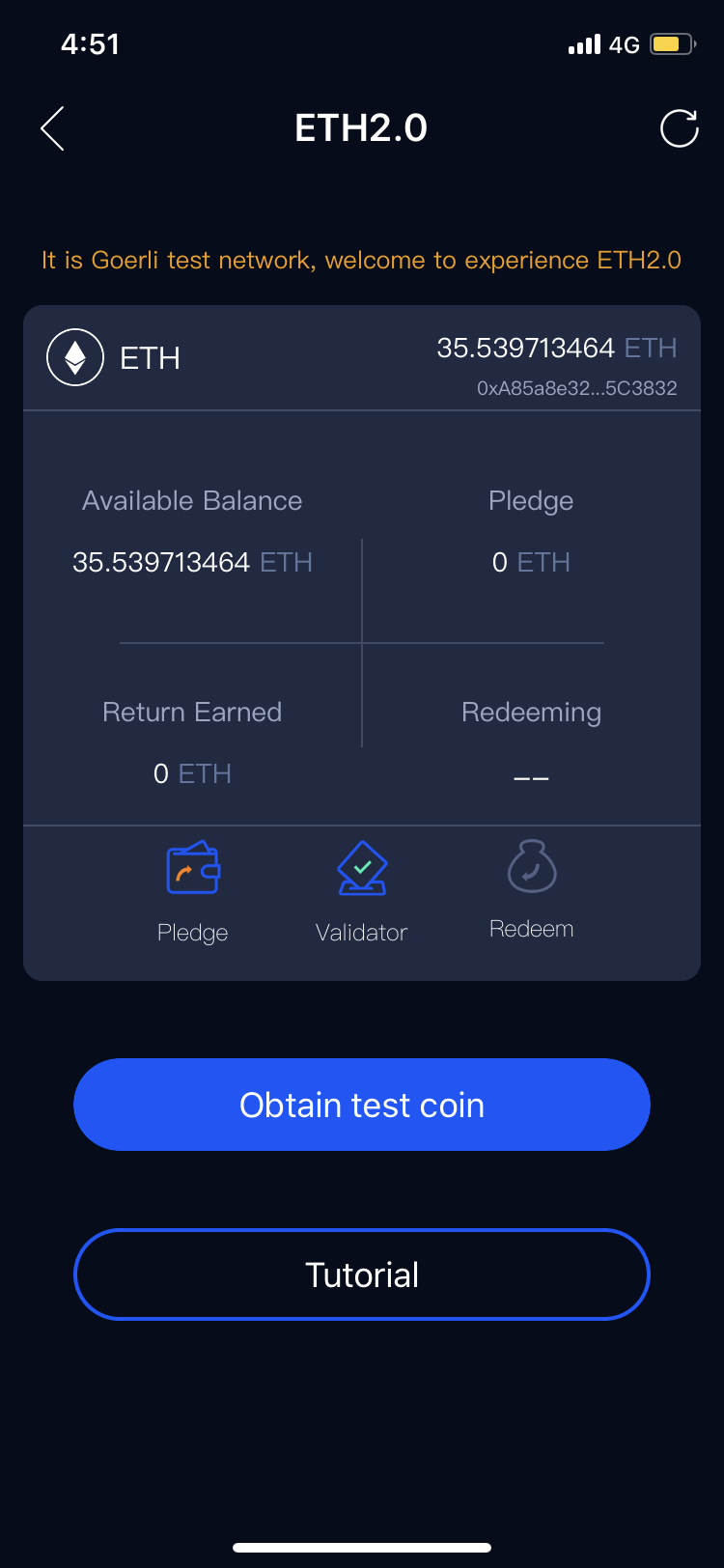
4. ①If the balance is 0, click “Obtain test coin" to apply for ETH2.0 test currency first ,and you can get 11 ETH2.0 test coins for free from HyperPay
*If you want to get more test coins, you can follow the ETH2.0 application tutorial and apply for. The tutorial is as follows: https://hyperpayhelp.zendesk.com/hc/en-us/articles/360001531796
②If you already have the currency, click “Pledge” to start
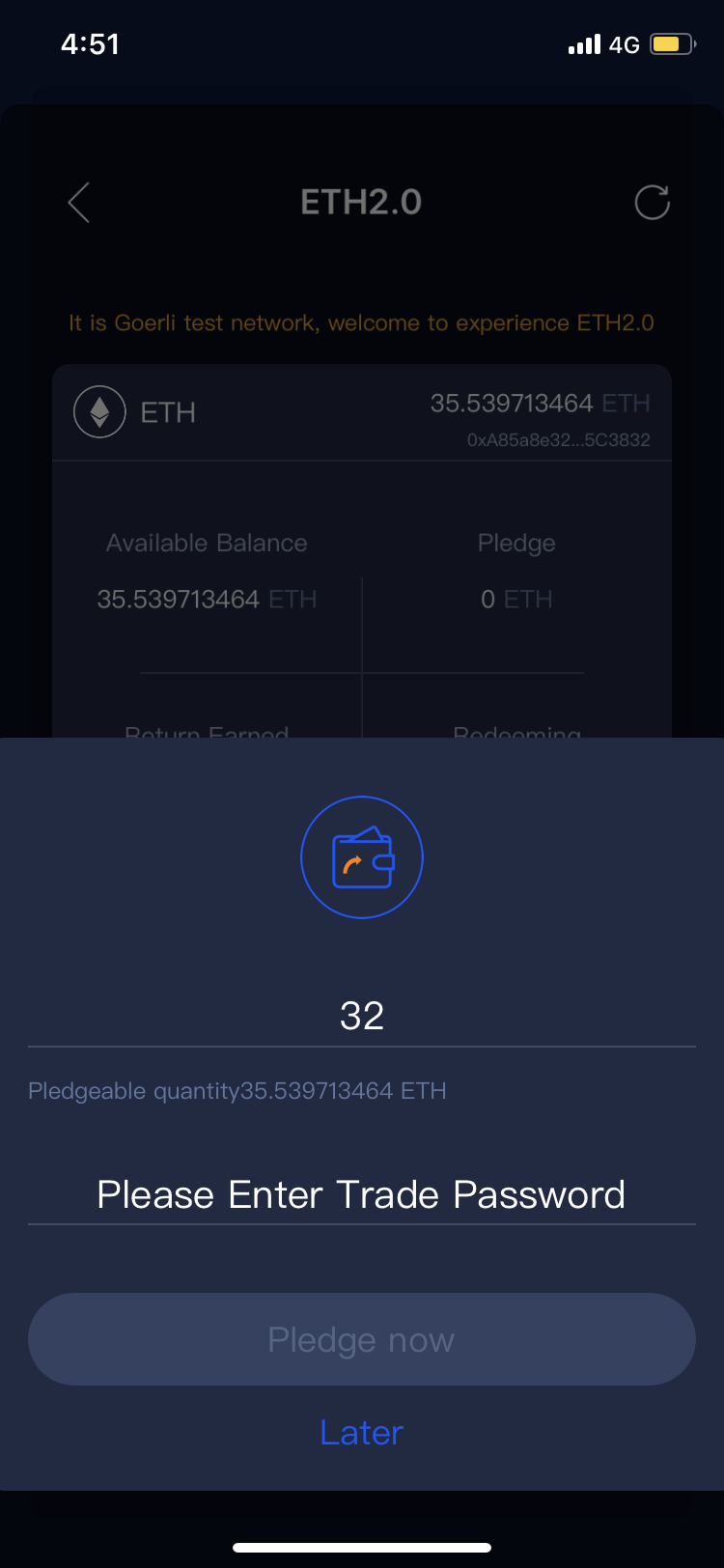
5. Enter the pledge amount and trading password, and click “Pledge Now”
6. Then you can check you balance and pledge amount in the ETH2.0 page
Relevant concepts about ETH2.0:
How to become a validator
ETH2.0 (Serenity) will require users to send 32 ETHs to the consensus system. These ETH will be pledged and locked in the smart contract, and then users can become block validators. At the same time, users need to make sure the validator client to be online all the time to run a beacon chain node. For the current App cannot run nodes, there's no revenue.
How many validators there are
According to the latest ETH2.0 specification, it is recommended that the minimum number of validators in each committee is 111, which means that there will be at least 113,664 validators in all 1024 shard chains, and the total amount of pledged ETH is 3,637,248 (32*111* 1024=3,637,248).
In order to achieve crosslink in all shards during each epoch period (that is, the shard chain validator committee approves an operation called crosslink which can prove the content and status of the shard chain), the number of validators in each committee needs to be 256 (less than 256, the number of crosslink will be less), so it means that the total amount of ETH pledged in the ETH2.0 network is 8,388,608 ( 32*256*1024=8,388,608).
Validator epoch
In the ETH2.0, every 64 blocks generated takes approximately 6.4 minutes, which is an epoch. The Beacon Chain will shuffle the validators and redistribute them to the shard chains
Verifier's financial incentives
Total incentive for pledge= validator's reward (interest) + network transaction fee - validator's cost
Pledge reward
In the latest ETH2.0 specification, this reward is in a sliding scale based on the total amount of ETH pledged in the network. If the total amount of pledged ETH is small, the interest rate available to the validator is high, on the contrary, the total amount of pledged increases, the interest rate will decrease.